A
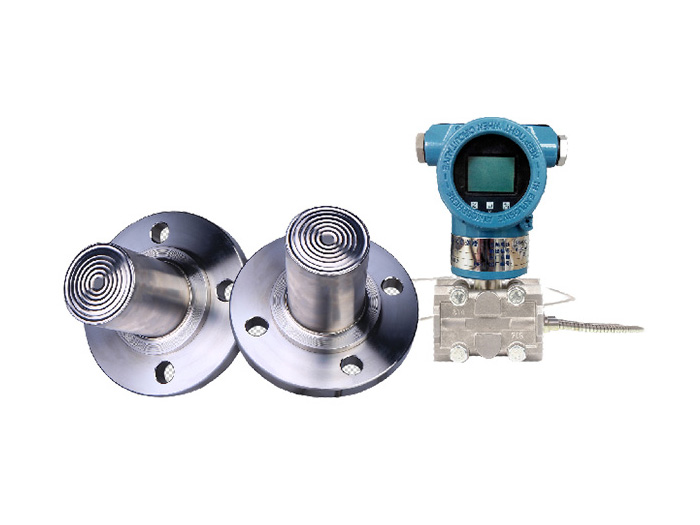
double flange level gauge is a specialized instrument used for measuring the liquid level within tanks or vessels in industrial settings. It operates on the principle of differential pressure, where the pressure difference between two points in a container is measured to determine the liquid level.
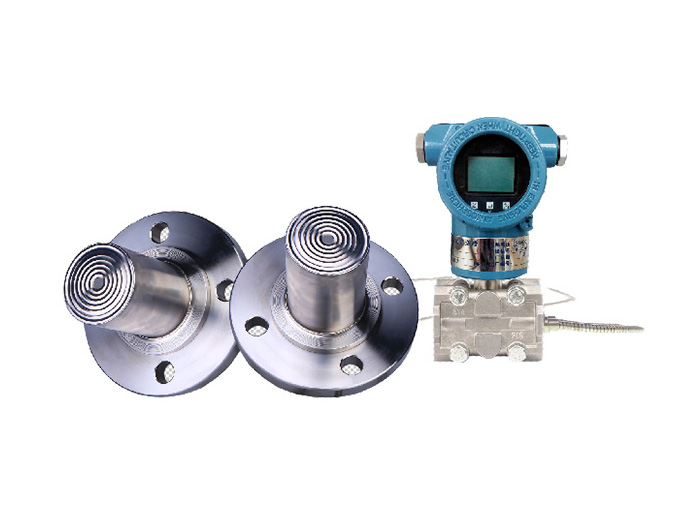
The gauge consists of two flanges, one installed at the bottom (high-pressure side) and the other at the top (low-pressure side) of the container. The high-pressure side flange is in contact with the liquid phase, experiencing the combined pressure of the liquid column and the gas phase above it. The low-pressure side flange, however, is exposed only to the gas phase. The pressure difference (ΔP) between these two points is proportional to the liquid level (h), as described by the formula ΔP = ρgh, where ρ is the density of the liquid, g is the acceleration due to gravity, and h is the height of the liquid column.
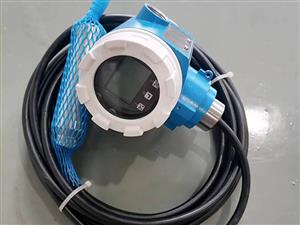
The pressure difference is transmitted through capillary tubes filled with an isolation fluid, such as silicone oil, to a
DIFFERENTIAL PRESSURE transmitter. This transmitter converts the pressure difference into an electrical signal, typically 4-20mA, which can be transmitted to a control system for monitoring and control purposes.
double flange level gauges are particularly suitable for applications involving corrosive, high-temperature, or high-viscosity liquids, as they prevent direct contact between the process fluid and the measuring instrument. They also offer high accuracy, reliability, and stability, making them a preferred choice in industries such as chemical, petrochemical, pharmaceutical, and food and beverage processing. Additionally, their compact design and ease of installation make them adaptable to various tank configurations and process requirements.