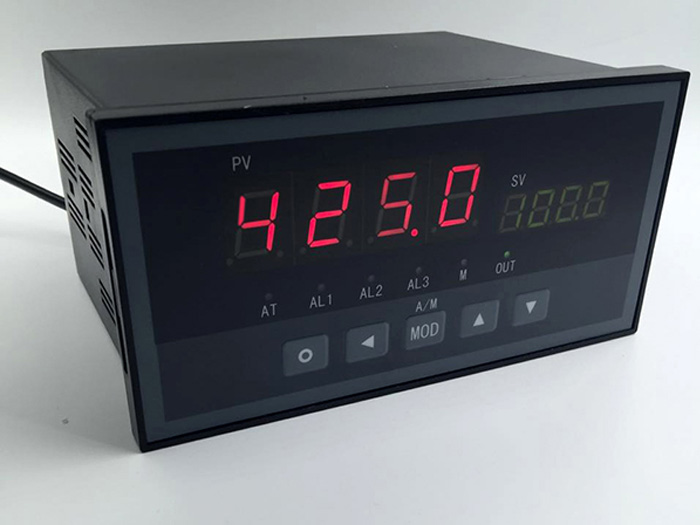
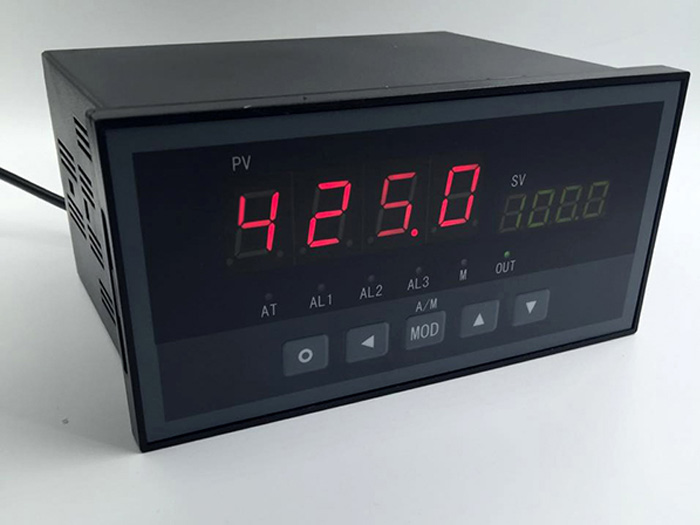
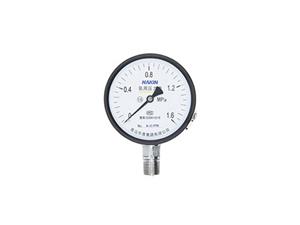
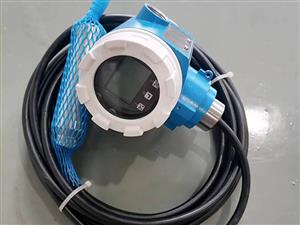
The PID (Proportional-Integral-Derivative) controller is a cornerstone of feedback control systems, widely employed across industries to maintain precise regulation of variables such as temperature, pressure, flow rate, and position. Its design integrates three distinct control mechanisms—proportional (P), integral (I), and derivative (D)—each addressing specific aspects of system dynamics.
The proportional term generates an immediate control action proportional to the current error between the desired setpoint and the measured process variable. This ensures rapid response to deviations but may leave residual steady-state errors. The integral term accumulates past errors over time, eliminating static offsets by continuously adjusting the control output until the error reaches zero. However, excessive integral action can induce overshoot or oscillations. The derivative term anticipates future errors by analyzing the rate of change of the error signal, enhancing system stability by damping overshoot and reducing settling time.
where e(t) is the error signal, and Kp, Ki, and Kd are tunable gains.
PID controllers excel in linear systems with stable dynamics, though adaptations like fuzzy logic or model predictive control extend their applicability to nonlinear processes. Tuning these parameters is critical; methods such as the Ziegler-Nichols technique or trial-and-error adjustments balance responsiveness and stability.
Industrial applications span automotive cruise control, chemical reactor temperature regulation, and robotic motion tracking. Their simplicity, robustness, and cost-effectiveness make
PID controllers indispensable, with over 95% of industrial control loops utilizing this architecture. Modern implementations leverage microprocessors for adaptive tuning and real-time optimization, ensuring reliability across diverse operating conditions.
In summary, the
PID controller’s enduring relevance stems from its ability to synthesize immediate, cumulative, and predictive control actions, enabling precise and stable system regulation in complex environments.