A
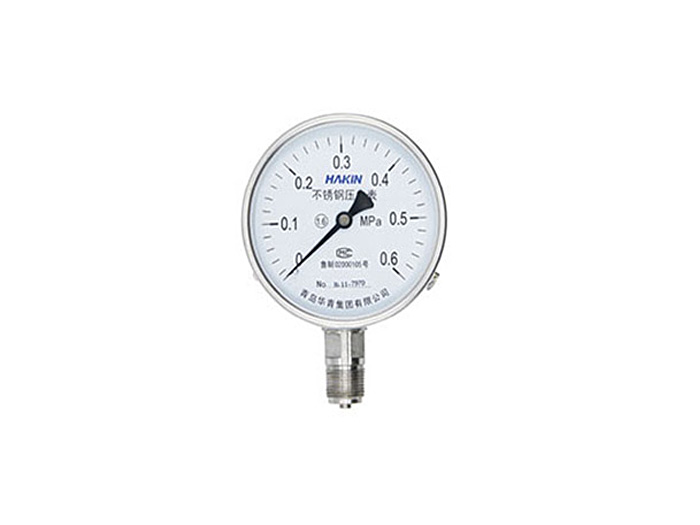
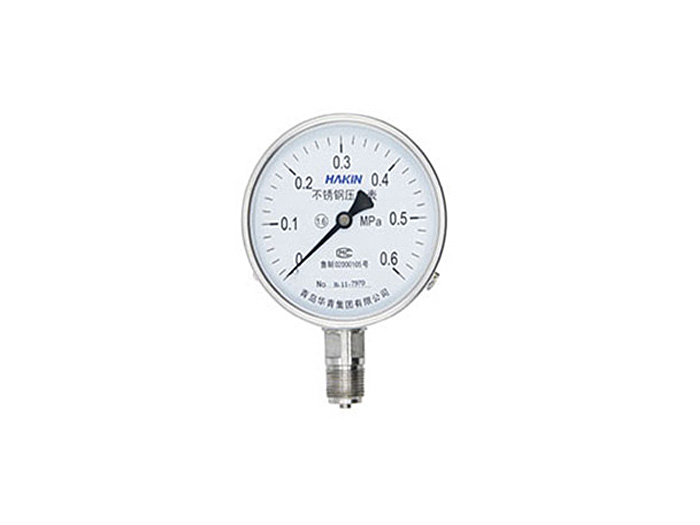
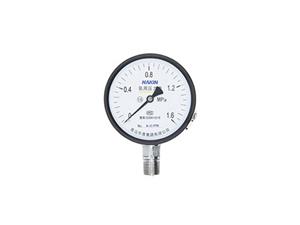
Stainless steel pressure gauge is a durable and reliable instrument designed to measure and display pressure in various industrial, commercial, and residential applications. Constructed primarily from stainless steel, this type of pressure gauge offers exceptional resistance to corrosion, making it suitable for harsh environments where exposure to moisture, chemicals, or extreme temperatures is common.
Design and Functionality
The core components of a
Stainless steel pressure gauge include a stainless steel case, a Bourdon tube or diaphragm mechanism, and a clear, easy-to-read dial. The Bourdon tube, typically made of stainless steel, deforms elastically under pressure, converting the applied pressure into mechanical movement. This movement is then transmitted to the pointer via a linkage system, providing a visual indication of the pressure on the calibrated scale.
Key Features
Corrosion Resistance: Stainless steel construction ensures longevity and performance in corrosive environments, such as chemical processing plants or marine applications.
High Accuracy: Precision engineering guarantees reliable pressure readings, essential for critical process control.
Wide Pressure Ranges: Available in various pressure ranges, from vacuum to ultra-high pressures, catering to diverse industrial needs.
Safety: Many models include safety features like overpressure protection, rupture discs, or solid front cases to prevent accidents in case of sudden pressure spikes.
Versatility: Suitable for measuring pressure in gases, liquids, and vapors, making it adaptable to multiple applications.
Applications
Stainless steel pressure gauges are widely used in industries such as oil and gas, petrochemicals, pharmaceuticals, food and beverage, and HVAC systems. They are employed to monitor pressure in pipelines, reactors, compressors, boilers, and hydraulic systems, ensuring operational safety and efficiency.
In summary, stainless steel
PRESSURE GAUGEs combine durability, accuracy, and versatility, making them indispensable tools for pressure monitoring in demanding industrial environments. Their resistance to corrosion and ability to withstand harsh conditions ensure reliable performance, contributing to the safety and productivity of various processes.