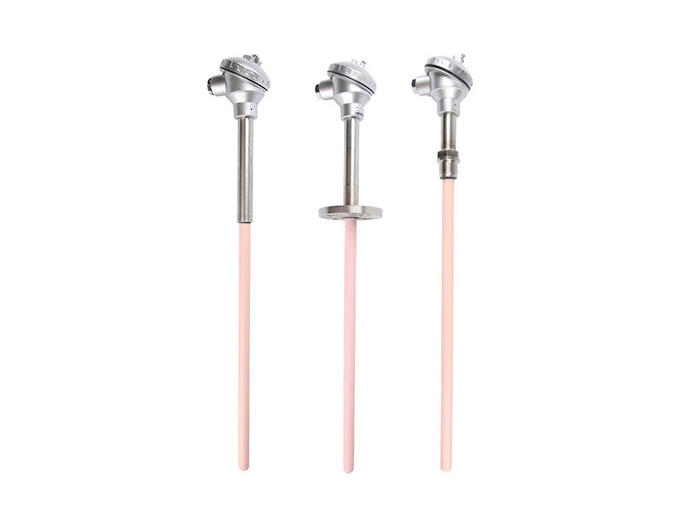
The thermal resistance of a thermocouple refers to its ability to resist heat transfer from the measuring junction to the surrounding environment or the connecting leads, which can influence measurement accuracy.
A thermocouple operates on the Seebeck effect, where two dissimilar metals generate a voltage proportional to the temperature difference between their junctions. However, heat loss along the thermocouple wires can introduce errors. The thermal resistance here is a critical factor—it's not a single value but a characteristic affected by the materials used, the geometry of the wires, and the insulation properties.
High thermal resistance in a thermocouple setup can lead to slower response times as heat takes longer to travel from the measurement point to the reference junction. This is particularly important in applications requiring rapid temperature changes, such as in industrial processes or scientific experiments.
To mitigate the effects of thermal resistance, manufacturers often use materials with low thermal conductivity for the thermocouple wires and provide adequate insulation. Additionally, the design of the thermocouple, including the thickness of the wires and the type of sheathing, plays a significant role in determining its overall thermal resistance.
In summary, while the thermal resistance of a thermocouple isn't typically a specification listed in data sheets, understanding its implications is crucial for accurate temperature measurement. Proper selection of materials, design, and installation can help minimize the impact of thermal resistance, ensuring reliable and precise thermocouple performance across various applications.